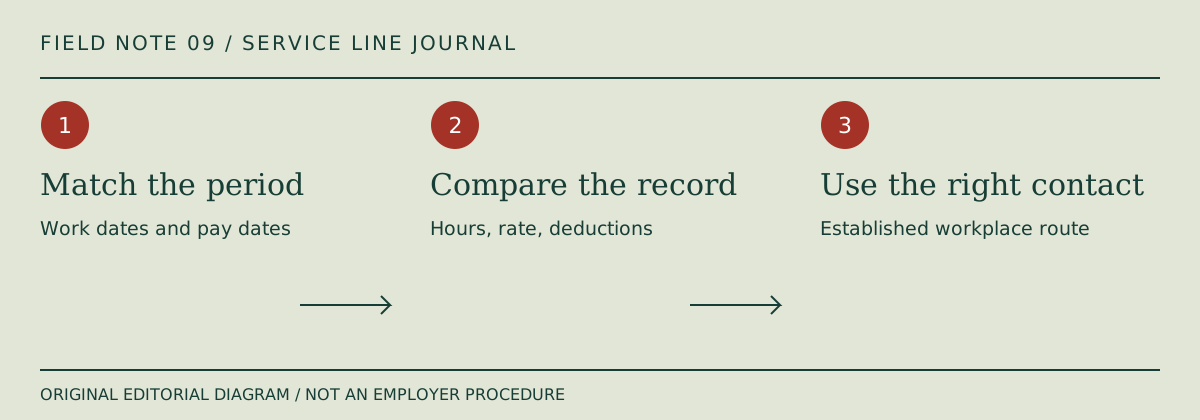
When a restaurant pay statement is confusing, start with the records rather than an assumption about what went wrong. The scheduled hours, hours actually worked, pay period and payment date can describe different things. Comparing the right dates often makes a question easier to explain.
This guide provides general US restaurant-work information, not legal advice or a statement of Sizzling Platter payroll policy. No payroll-card provider, employee portal or payment schedule has been verified for this article. Do not enter credentials into a website just because it appears in a search for the company and the word 'payroll.'
Keep a clear personal record
- Note the dates and start and finish times you actually worked.
- Record breaks accurately and distinguish them from scheduled breaks you did not take.
- Retain pay statements and relevant written pay information in a secure place.
- Save any approved time corrections and the dates you requested them.
- Keep the employer name and work location associated with each record.
Do not include customer payment details, coworkers' private information or passwords in these notes. A simple personal log is usually easier to compare than scattered screenshots containing unrelated data. If you work at multiple locations or for different employers, separate the records clearly.
Check the period before comparing totals
A payment received this week may cover an earlier pay period. Read the dates on the statement and compare them with the matching work record. Look at the stated rate, recorded hours and itemized deductions. A difference between gross pay and take-home pay does not by itself establish an error.
If something is still unclear, identify the exact item. 'My record shows this shift on this date, but I cannot find it in this pay period' is more useful than 'My pay looks wrong.' Ask the appropriate workplace contact to explain the statement or the correction process. Do not alter a record yourself unless that is part of the authorized process.
Make the question easy to investigate
Provide the minimum information needed: your name, location, relevant pay period and the particular discrepancy. Use the established employee channel rather than posting a pay statement publicly. Keep a copy of the question and any response so you can follow the issue without relying on memory.
The company's general contact page is not verified here as a payroll-support desk. Ask your manager or confirmed HR contact for the correct route instead of sending sensitive pay documents to a recruiting address merely because it is public.
Know where official guidance starts
The US Department of Labor's restaurant employment toolkit links to guidance on minimum wage, overtime, hours worked, deductions and records. It also explains that state law can provide additional protections. A manager title alone does not resolve overtime classification, and the applicable facts matter.
If an issue remains unresolved, the toolkit provides Wage and Hour Division contact information and links to state resources. Describe the facts and ask which agency or process applies. Avoid guessing about legal outcomes or deadlines from a general article. Accurate records, a specific question and the right official source are a stronger starting point.
Use a fictional comparison to isolate the question
Imagine a pay statement covering October 1 through October 14 and a personal log containing shifts through October 18. Comparing the entire log with that statement would mix two periods. First isolate October 1–14. Then compare the relevant shifts and recorded hours. The payment date may be later than the end of the period, so it should not be treated as the date every included shift occurred.
Next, identify whether the uncertainty concerns time, rate, a deduction or the payment arriving. Those are different questions. An apparently missing shift calls for a time-record comparison. An unfamiliar deduction calls for an explanation of that item. A deposit problem may need a different workplace contact. This example does not establish a lawful deduction or determine what anyone is owed.
Separate tips, reimbursements and ordinary wages
Where a role involves tips, ask how the employer documents them and how they appear in the records you receive. Do not assume a tip arrangement from the restaurant brand or from another worker's experience. The Department of Labor toolkit links to guidance on tipped employees; state rules and the actual arrangement can matter. Keep questions about the calculation separate from assumptions about legality.
An approved expense reimbursement is another category to clarify. If you were told an expense would be reimbursed, retain the approval and the relevant receipt securely, then ask where and when reimbursement should appear. Do not combine an expected reimbursement with hours worked and conclude that the wage rate is wrong. A clear category helps the person reviewing the issue find the appropriate record.
Protect the record while seeking help
Use the workplace's established secure channel for documents containing detailed pay information. If you are asked to send a screenshot, confirm what needs to be visible and remove unrelated information when that is appropriate and accepted by the recipient. Never share an account password or verification code so someone can “check it for you.” A legitimate explanation of a pay statement should not require giving an unrelated person control of your account.
Keep a dated copy of each correction request and response. Note whether the answer explains the calculation, confirms a correction or asks for more information. Those outcomes are not the same. If a correction is promised, ask which statement or payment will show it, then compare that record when it becomes available. Avoid erasing the original evidence merely because the issue appears to be resolved.
Know what this article cannot determine
A general guide cannot decide an individual wage claim, calculate all applicable overtime or establish a filing deadline. If the question is significant or time-sensitive, consult the appropriate official agency or a qualified adviser promptly. Give them the actual dates and records rather than relying on an online estimate or a conclusion drawn from a job title.
Continue reading
Finding the Right Contact: Restaurant, Recruiting or Workplace Issue?
Restaurant Schedules and Availability: Make the Details Concrete