Preparing for a restaurant interview is easier when you focus on the actual vacancy rather than a list of supposedly secret questions. Start with the brand, location, employer name and job description linked from the official Sizzling Platter jobs hub. Save a copy so your preparation matches the role you applied for.
The exercises in this article are general preparation advice. They are not verified Sizzling Platter interview questions, scoring criteria or hiring requirements. Interview formats and expectations can vary, and only the hiring team can confirm the arrangements for your meeting.
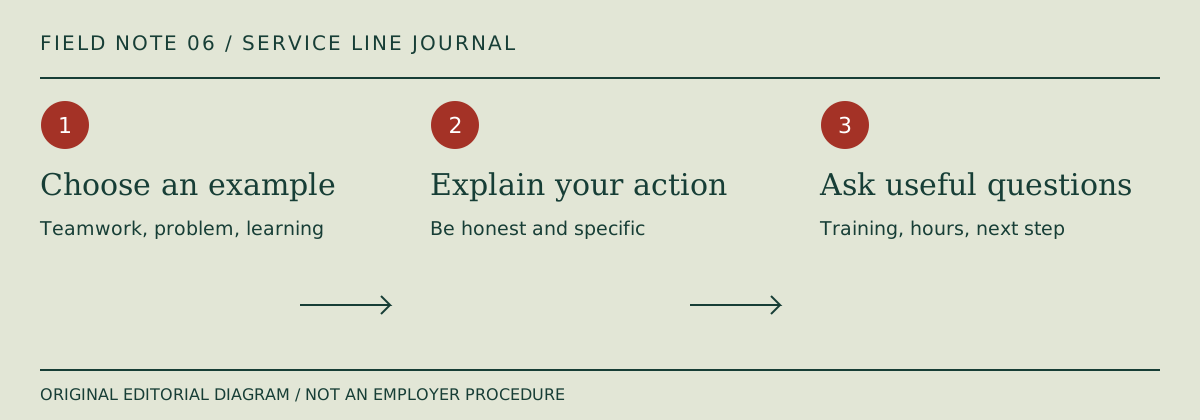
Prepare three short examples
Choose one example of teamwork, one of handling a problem and one of learning something new. Explain the situation, what you personally did and what happened afterward. Keep the account honest and specific. If the outcome was imperfect, describe what you learned rather than polishing it into an implausible success story.
A first-time applicant can use school, community or volunteer experience. An experienced applicant can choose a service situation while avoiding confidential information about former colleagues or customers. The purpose is to make your behavior understandable, not to reveal private details or claim that every past workplace operated the same way.
Practice a service problem
Suppose a guest says an order is incorrect while other customers are waiting. A thoughtful answer might start with listening, checking the relevant order details and involving the person authorized to resolve the issue. Explain how you would keep communication calm and avoid making a promise you cannot fulfill.
Do not invent a refund policy or say you would ignore food-safety rules to save time. If a scenario includes an allergy, damaged equipment or another safety concern, emphasize getting trained help and following the restaurant's procedures. Knowing when to ask is a useful skill, especially when you are new.
Be precise about availability
Write down when you can reliably arrive and when you must leave. Include travel time, school commitments and other fixed obligations. 'I can work any time' can create a mismatch if it is not true. A narrower but dependable schedule gives the interviewer something concrete to assess.
If you have a future commitment, describe the dates clearly. Ask how scheduling is handled rather than assuming shifts are fixed, posted a particular number of days ahead or easy to swap. Those are details to confirm with the hiring team, not policies established by this guide.
Bring questions that help you decide
- What would a new person learn during the first part of training?
- Which tasks are most important for this particular role?
- Who would I report to during a shift?
- What hours are you trying to cover, and what weekly range is expected?
- What is the next step after the interview, and how will I hear about it?
Before the meeting, verify the time, place or remote format using the invitation and your application record. Plan a realistic journey and keep the contact information accessible. Afterward, write down what was confirmed and what remains uncertain. A good interview should help both sides understand whether the role and working arrangement fit.
Connect your examples to the vacancy
Read the posting once for responsibilities and again for evidence you can provide. If it emphasizes accurate orders, prepare an example of checking details. If it emphasizes teamwork, describe a handoff or shared deadline rather than saying only that you are friendly. You are not trying to match every phrase in the advertisement. You are making the relevant parts of your experience easy to understand.
A useful practice structure is situation, action, result and lesson. For a hypothetical volunteer event, the situation might be several visitors arriving at once. The action could be checking what each person needed and asking a teammate to handle one queue. The result might be less confusion, followed by a lesson about agreeing on responsibilities earlier. Use that structure with your own real experience, not as a story to repeat as though it happened to you.
Explain a mistake constructively
Interview practice should include an example that did not go perfectly. Choose a manageable situation and explain how you noticed the mistake, told the appropriate person and helped correct it. A restaurant team needs accurate information when something goes wrong. An answer that hides the problem until someone else notices can raise different concerns from an answer that shows early, responsible communication.
For example, a candidate with real order-taking experience might describe discovering a missed item before handing over the order. The useful details are how they checked the record, coordinated the correction and changed their checking habit afterward. Do not claim you independently issued a refund or changed a process if you lacked that authority. A modest, truthful example is stronger than an impressive invention.
Prepare for practical questions
- Know your earliest realistic start date, including any existing commitments.
- Check the journey at the proposed shift times, not only at midday.
- Be ready to explain the difference between your preferred hours and firm availability limits.
- Review any qualifications you actually hold and when they expire, if relevant.
- Write down questions about pay basis, training time and the tasks included in the role.
If asked about work you have never done, explain that directly and identify how you would learn. You might ask who demonstrates the task, where the approved instructions are kept and how you can check your understanding. Do not respond to uncertainty by inventing technical procedures. An interview is an opportunity to show judgment as well as enthusiasm.
Leave with a clear next step
Near the end, summarize any important point that could affect fit. If you can work evenings but not past a particular time, check that the interviewer understood the limit. If the discussion described a different location or role from your application, ask which position is under consideration. Clarifying now is easier than discovering the mismatch when a schedule or offer arrives.
Afterward, keep factual notes: who you met, what role was discussed, the stated next step and any unanswered questions. If you send a follow-up through an appropriate confirmed channel, keep it brief and relevant to the meeting. Do not treat an encouraging conversation as an employment offer. Compare any eventual written terms with your notes and ask about material differences before deciding.
Continue reading
Restaurant Schedules and Availability: Make the Details Concrete
Your First Restaurant Shift: What to Confirm and What to Ask